Author: our natural world
Curra Moors Circuit; Royal National Park
Completed on 25th November 2025
Orchids, the origins of species and imperial conquest
Orchids, the origins of species and imperial conquest
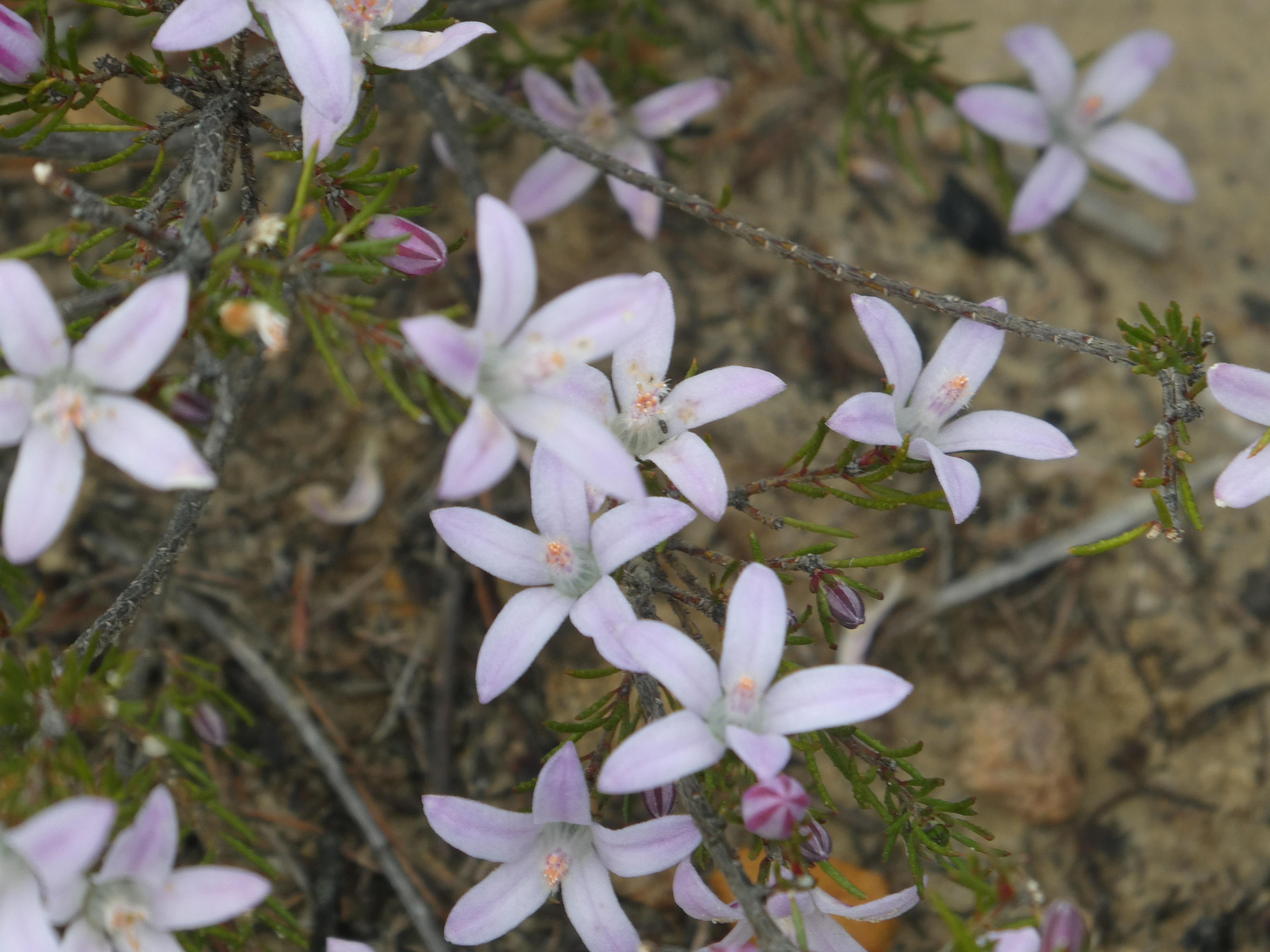
I was leading a walk in Dharawal National Park a month or so ago and one of the participants asked me why so many people love orchids. Interestingly and somewhat ironically, it was just as I spied a species of Darwinia that I had hoped to show the party! There is a link. But more on that later.
I never did get to spell out my thoughts on orchids, on their strange sexual behaviour, their variety of forms and the endless debates online as to the “true” identity of each and every species. And, before I embark on this article, let me say outright that I am no expert!
For those who love orchids and seek to identify them “precisely”, there is a mystifying and forever changing landscape of naming and name changes. It is, of course, not just confined to the family of Orchidaceae. It is not even confined to the plant kingdom. However, let’s focus on Orchidaceae as our case study today.
Recently I had the pleasure of reading The Lost Orchid by Sarah Blitson. In it Blitson spells out the “discovery” of a particularly beautiful orchid somewhere in the wilds of South America. It is given the Linnean name of Cattleya labiata and a passionate love affair began, complete with “Raiders of the Lost Ark” style searches for more of this plant and for almost any other orchid one could find, remove and return to England/Europe/USA. “Orchidomania” had begun! As the scientists and their collectors brought back different plants, so the arguments began. Is this C labiata or is it different? Have we a new “species”?
The chase became ever more intense when certain commercial nurseries became involved and when they eventually learnt to cultivate orchids and create new “varieties”. By then, the concept of a species was becoming increasingly slippery, especially after both Wallace and Darwin had entered the scientific world with their thoughts on evolution! Later, with an understanding of genetics, the fixed notion of species was truly made redundant. And, as every person who comes across a Caladenia in our bush can testify, orchids are especially promiscuous!
Now in another life, I taught a historiographical course on imperialism. One of the themes we were to explore was our different historians dealt with the tools of empire. Traditionally, this often covered guns, ships, military organisation, economic trading relations and political structures. I took it further and thought of the mapping of the world. That let me think about boundaries (bordered lands and border lands; those with the law and those who were “outlaws”), and about the power of naming (European names imposed on the original names of the inhabitants brought under colonial control).
That takes me right back to the naming of Cattleya labiata. It is, of course, the name imposed on it by Europeans! Indeed, so much of the Linnean binomial system is an imposition of control. To name is to possess!
Think of the Facebook groups that devote themselves to help us identify species. Someone asks for a name of, for example, a Magpie-lark. You get someone come in and call it a Pee-wee, Peewit, etc. As sure as the sun rose this morning, someone will then tell them off for not using the “correct” name! It also happens in the plant groups. There is a “right way” and that must be imposed.
Yes, it is useful to have an accepted naming system and I like the order that enables us to share our knowledge across the globe. But; and this is a big BUT; this is convention! And do remember that the “right” name is an imposed name over the original names used before European conquest! It also obliterates local names that enrich language.
Finally, for all those groups who help identify plants or animals to people but who then just come over the top and demand that people use the currently accepted “right” name, do explain why that right name is now the right name and why it has changed!
And do accept, too, that species also change, along with their names. This is a world that is constantly in flux and are we not all richer for it!
Barren Grounds Nature Reserve
This report covers a visit I led on October 8th 2025. There are a few question marks over the ID of some plants so feel free to leave comments if you can help.
Mirang Road Fire Trail, Heathcote National Park
October 1st, 2025: and time to get out and about amidst the flowers!
Mowlee Ridge (Little Marley Fire Trail) August 25 2025
The attached report covers a walk I led on behalf of the NPA of NSW on August 25, 2025. Spring is sprung!
Visiting the Manning Valley July 2025
Attached is a short account of the recent trip to the valley that was my birthplace and is my spiritual home. We were there for family business but that has been left out of the account. Instead, we meander via special locations, ponder the meaning of life and focus on birds!
Yes, birds! The place is rich with diversity and even in mid-winter there is something to see!
Newcastle on Tyne May 2025
London April-May 2025
Helsinki April 2025
Helsinki April 2025
 Our Natural World